Some retailer–manufacturer relationships in jewelry feel effortless. Orders flow, specs are understood, deadlines hold, and both sides trust each other enough to solve problems instead of assigning blame. Other relationships feel like a constant negotiation over the same misunderstandings. The difference is rarely about the people. It is almost always about how the two businesses coordinate.
This piece looks at what the best retailer–manufacturer partnerships do differently. It is written for jewelers on either side of that relationship, retailers commissioning work and manufacturers producing it, because the habits that make collaboration smooth are shared, and the friction only disappears when both sides adopt them.
Two businesses, one deadline
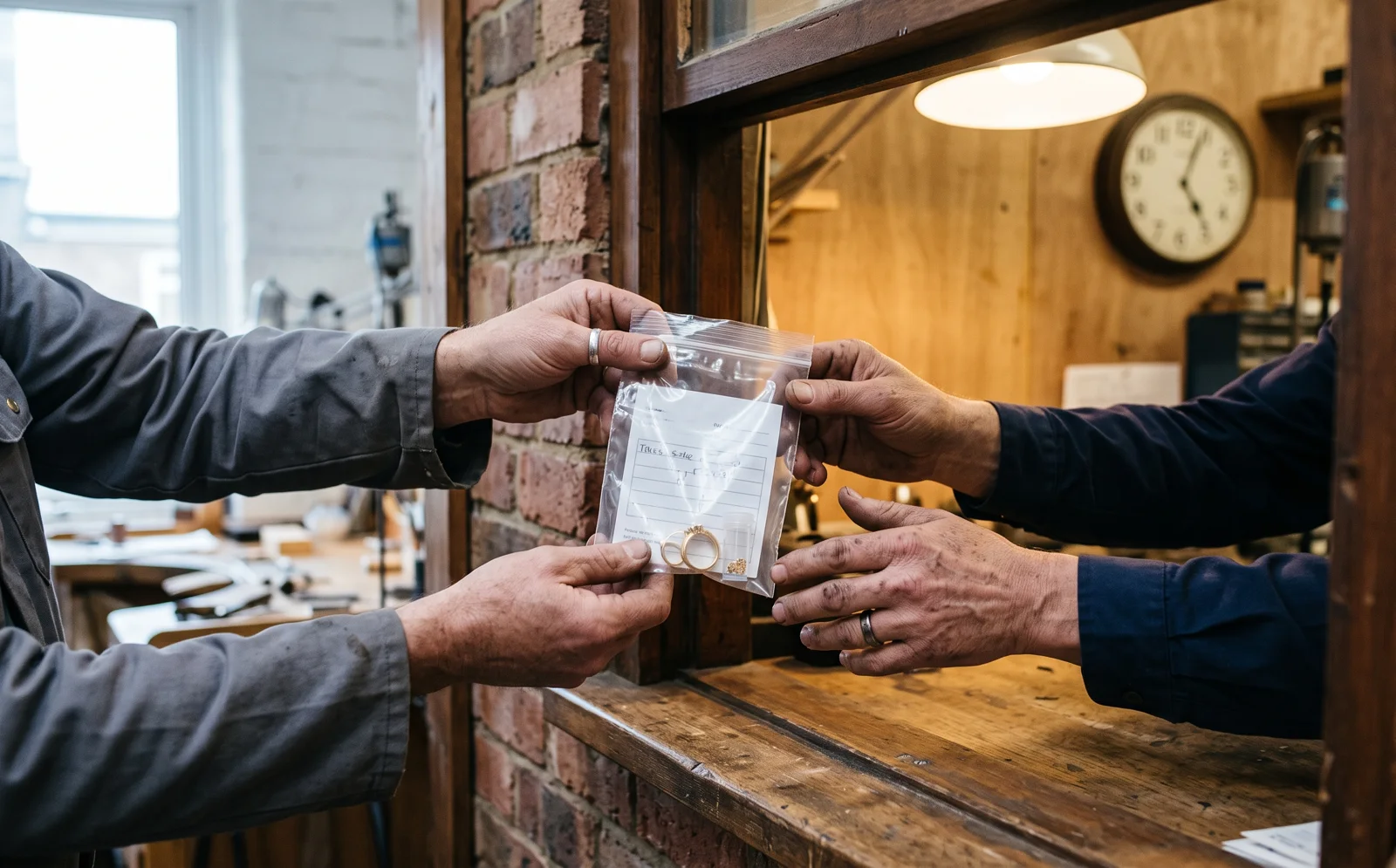
A retailer and a manufacturer are separate companies with different pressures. The retailer holds the customer relationship, the deposit, and the promised date. The manufacturer holds the bench capacity, the materials, and the craft. Neither has full visibility into the other's world, and yet both are accountable for the same finished piece landing on the same day.
That structural gap, two independent businesses jointly responsible for one outcome, is the source of nearly every recurring friction point. Understanding it reframes the goal. You are not trying to make one side more compliant. You are trying to close the visibility gap between two parties who genuinely want the same result.
What the best partnerships get right
Across shops that collaborate well, a few patterns show up again and again.
They agree on the spec before work begins. The strongest partnerships treat the specification as a shared, written artifact, not a verbal understanding. Size, metal, stone details, finish, deadline, and any special instructions are documented once and referenced by both sides. This single habit prevents the majority of rework.
They share status instead of chasing it. In weaker relationships, the retailer calls to ask "is it ready?" and the manufacturer feels chased; the manufacturer goes quiet and the retailer feels left in the dark. In strong ones, both parties can see where a job stands without a phone call. Visibility replaces interrogation, and the tone of the relationship shifts from suspicious to collaborative.
They protect each other's margin on pricing. Because metals pricing is live, a piece quoted last week can cost more to make this week. The best partners handle this transparently, pricing against the current market at the point of commitment so neither side quietly absorbs a loss. Surprises on money erode trust faster than almost anything else.
They keep a shared history. Strong partners can look back at past jobs, turnaround times, and how issues were resolved. That shared memory means recurring work gets faster and easured over time, and it survives staff turnover on both sides.
The trust equation
Trust between a retailer and a manufacturer is not a mood. It is the accumulated result of predictability. Every job that comes back on time, on spec, and at the agreed price adds to it. Every surprise subtracts. Seen that way, the levers for building trust are concrete.
- Predictable specs — nothing gets interpreted differently than intended
- Predictable status — no one wonders where a job is
- Predictable pricing — the number agreed is the number honored
- Predictable terms — memo, consignment, and payment terms are clear and documented
Notice that none of these require the two businesses to like each other more. They require the two businesses to see the same information. Trust follows visibility.
Why generic tools strain the relationship
Here is the uncomfortable reality most jewelers have lived. The retailer runs a point-of-sale system built for the storefront. The manufacturer runs a system built for the bench, or works from spreadsheets and job bags. Neither system was designed to talk to the other, so the two businesses coordinate in the gap between them, over text, email, and phone.
That gap is where relationships fray. Not because anyone is careless, but because the tools force coordination into channels that lose information.
| What each side typically has | What it is good at | Where it fails the relationship |
|---|---|---|
| Retailer's POS system | Ringing sales, managing the storefront | Cannot see or share production status upstream |
| Manufacturer's ERP or spreadsheets | Managing the bench and materials | Cannot see the customer context or deadline pressure |
| Shared texts and emails | Quick, familiar | No shared source of truth; details get lost |
The construction industry faced a nearly identical problem and solved it with platforms where general contractors, subcontractors, and owners all coordinate on a shared project. Jewelry has largely lacked that shared layer, which is why so much retailer–manufacturer friction is really just tooling friction in disguise.
How to strengthen the relationship starting now
You do not need to overhaul everything to improve a partnership. A few moves compound quickly.
- Standardize the spec hand-off. Agree on a single written format for every job so nothing is ever verbal-only.
- Give each other status visibility. Find a way for both sides to see where a job stands without a call.
- Commit to live-market pricing. Take pricing surprises off the table by quoting against the current market.
- Document every memo and consignment movement. Clarity on terms prevents the slow-burn disputes that damage long relationships.
- Keep shared history. Let past jobs inform future ones so the partnership gets smarter over time.
For the tactical side of the conversation, our post on vendor communication tips covers the day-to-day habits, and the supply chain management guide zooms out to the full chain.
Where Jewelia fits
What strains a retailer–manufacturer relationship is not the people. It is the visibility gap between two independent businesses jointly responsible for one piece.
Jewelia closes that gap from both ends. A manufacturer runs the job in Production & Repairs with configurable stages, photos at each step, QC checkpoints and outwork tracked with due dates. A retailer holds the customer, the deposit and the promised date in the CRM, where the quote is built from live inventory and converts to an invoice on the same record. For the day-to-day habits, see our vendor communication tips; for the full chain, the supply chain management guide.
Bottom line
The best retailer–manufacturer relationships are not built on personality. They are built on shared visibility, agreed specs, predictable status, honest pricing, and clear terms. Close the visibility gap and the trust largely takes care of itself.
See how Jewelia connects retailers and manufacturers on one platform. Book a Jewelia demo →
Frequently asked questions
- What makes a good retailer–manufacturer relationship in jewelry?
- Shared visibility above all. The strongest partnerships agree on written specs, let both sides see job status without chasing, price against the live market, and document terms clearly, so trust is built on predictability rather than personality.
- Why do generic software tools strain these relationships?
- Retail POS systems and manufacturing tools are built for one side of the table and were never designed to talk to each other. That forces coordination into texts and emails, where details get lost and the visibility gap between the two businesses widens.
- How can retailers and manufacturers build more trust?
- Make the same information visible to both parties. When specs, status, pricing, and terms are shared and predictable, every on-time, on-spec job compounds trust, without either side having to work harder at the relationship itself.
Stop reading, start clicking.
Open a live Jewelia company with real inventory, memo, jobs and reports already in it. One work email, no card, no sales call, nothing to install.