Short answer: jewelry vendor management software gives every outside vendor a durable record and every job sent out a stage, an owner and a promised return date — so work at somebody else's bench stays visible on yours. It is a thinly served category, because most jewelry software is built for one business operating alone, and most general procurement software assumes you are buying goods rather than handing over work in progress.
Why this is its own category
Almost no jewelry business is self-contained. A single finished piece can pass through a CAD designer, a caster, a stone supplier, a setter and a polisher — five separate businesses, each with their own queue, their own communication habits and their own idea of what "done by Friday" means.
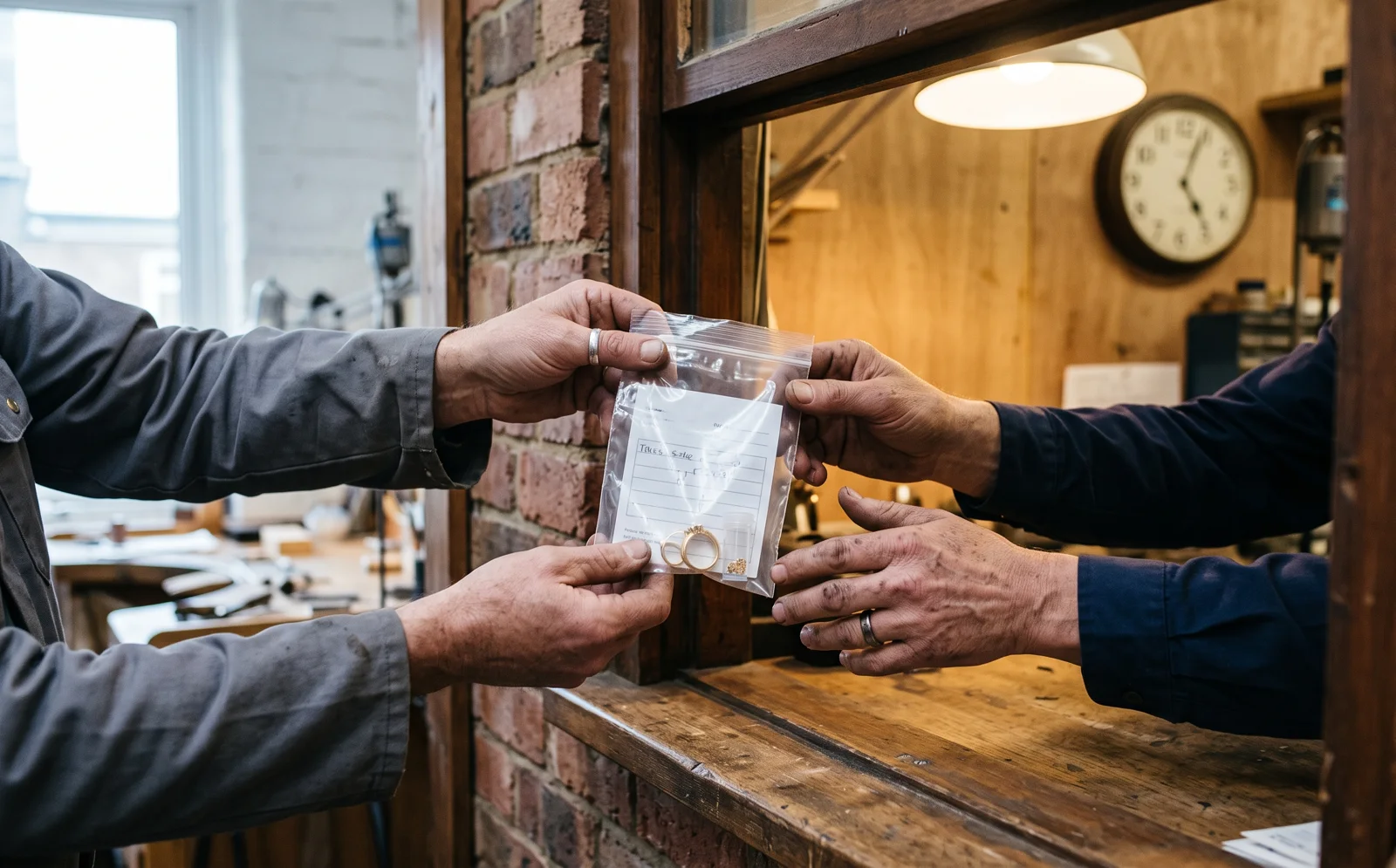
What makes this different from ordinary purchasing is that jewelry vendors sit outside your walls but inside your production process. You are not just buying from them. You are handing off work in progress and waiting to get it back before the next step can start.
That creates three problems no general tool models:
Sequential dependency. The setter cannot start until the caster finishes. One slip cascades down the entire chain, and the customer's date is at the end of it.
Split information. Specs, prices and timelines for a single job live across several separate conversations. Nobody holds the full picture, including you.
High-value goods in motion. You are not tracking components. You are tracking stones and metal moving between locations, often on memo, with real money exposed and no easy replacement if something goes wrong.
Why general software doesn't fit
Retail POS systems are built around the counter and stop at your back door. Traditional manufacturing ERP is built around a single factory floor and assumes you are the factory. Both are good within their walls, and both go quiet the moment work has to cross between businesses.
Procurement and vendor-management software from outside the trade has the opposite problem: it models purchase orders and supplier scorecards competently, but it has no concept of a job in progress at a third party, no concept of a piece that is your customer's property, and no way to attach the specs, photographs and CAD files that decide whether a casting comes back right.
The result is that most shops manage this part of the business from memory, a phone full of chats and a lot of follow-up calls. That works at low volume. It becomes the largest single source of delays, cost creep and missed promises as you grow.
What to look for
If you are evaluating tools, these are the capabilities that separate something genuinely useful from a contacts list with extra fields.
One durable record per vendor
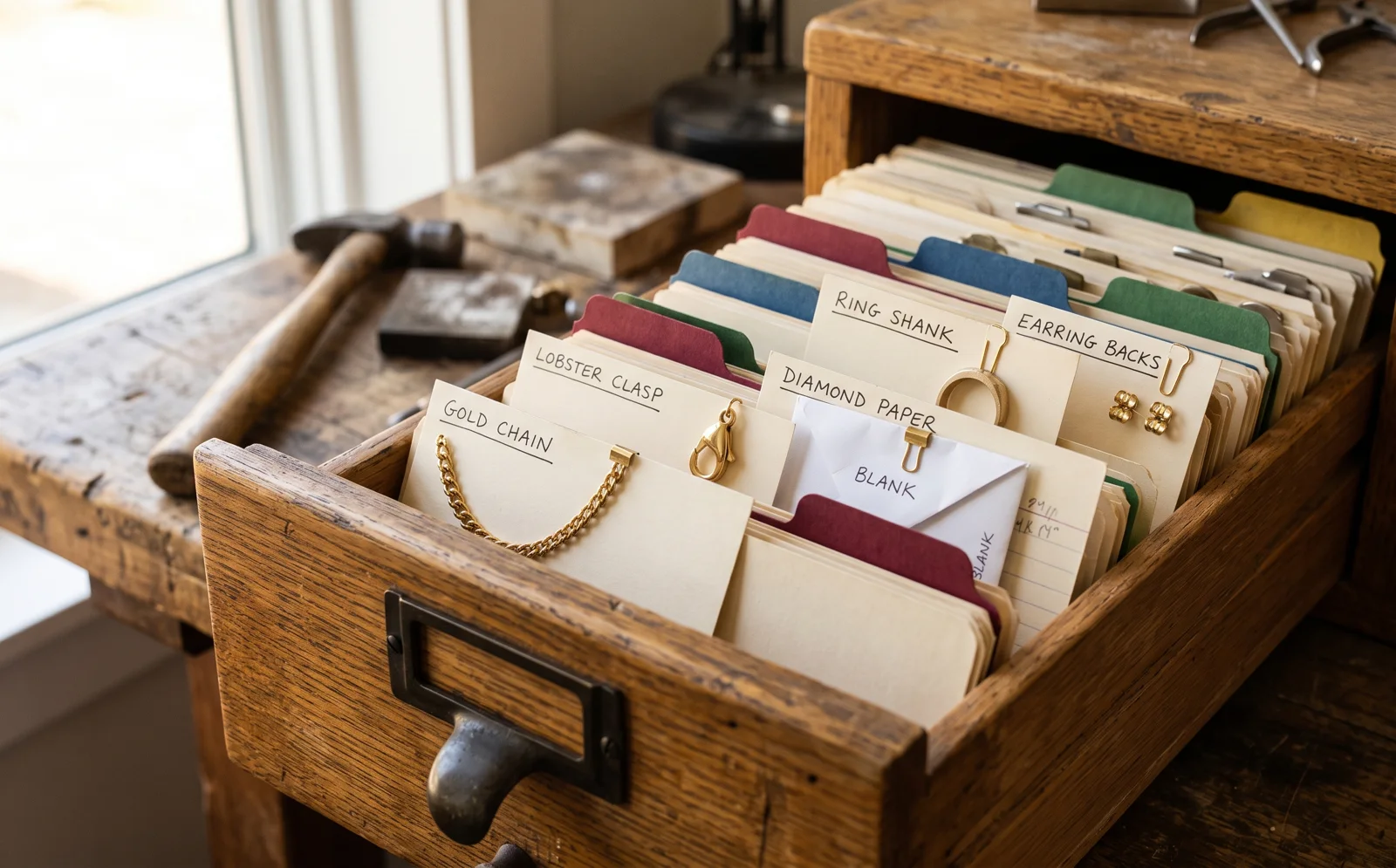
Contact details, what they are good at, typical turnaround, agreed pricing and terms, and every job you have ever sent them. The test is simple: could a new employee step into this relationship from the record alone? If vendor knowledge lives in one person's head or one person's phone, it walks out the door with them, and years of accumulated understanding about who is reliable for what goes with it.
Jobs tracked by stage, not by conversation
The unit you manage should be the job, not the chat. Stop asking "what did the caster say?" and start asking "what stage is this job in?" Every job needs a current stage, a named owner and a due date — including the stages that are happening in someone else's building.
Outwork with promised return dates
This is the single highest-value feature and the one most often missing. A send-out should be a tracked stage with its own due date, not an absence from your board. Log what left, where it went and when it is due back. Confirm receipt so nothing goes quietly missing in transit. And flag anything past its promised return automatically, so a slip surfaces before your customer's date is at risk rather than after.
The full spec travelling with the job
Attach specifications, photographs and any CAD to the send-out, so the vendor never has to call back with a question. Every question is at least one lost day, usually more given when answers arrive. This is also your protection when what comes back is not what you asked for.
Terms in writing, every time
Scope, price and date agreed up front and recorded. Verbal quotes over a call are where margins quietly disappear, and a vendor record with agreed terms removes the "I thought you said" conversation entirely.
Performance data over time
Who hits dates. Who is worth the premium. Who costs you rush fees. Patterns emerge over dozens of jobs that are invisible across any three, and they make both your sourcing decisions and your pricing conversations materially better.
A check-in before the deadline
The businesses that do not get burned are the ones that flag a job before the date passes, not after the client calls. A view of what is due this week and what is overdue turns firefighting into a five-minute morning routine.
What it is not
Two distinctions worth keeping clear while you shop.
Vendor management is not a marketplace. A marketplace helps you find and transact with parties you do not know. Vendor management helps you run the relationships you already have. Most established jewelers do not lack vendors — over years you have assembled a book of trusted casters, setters and stone dealers. What you lack is a good way to coordinate them. More on that distinction here.
Vendor management is not the same as a connected network. Vendor management is your internal record and works whether or not your vendors adopt anything. A network is a shared surface both sides are on, where status is visible without a call and jobs arrive with their files attached. The second is better when your vendors are on it; the first is what you need regardless.
Where Jewelia fits
This cross-business coordination is what Jewelia is built around rather than a module bolted on.
Production & Repairs gives every job a stage, an owner and a due date, with stages you define rather than someone else's list — and any stage can be sent to an outside caster, setter, engraver or plater and stays on your board with its own due date instead of disappearing. The Planner turns the check-in before a deadline into a task with an owner rather than something you have to remember. Analytics reports turnaround and throughput, which is where vendor performance stops being an impression and becomes a record.
The CRM holds each vendor as an account with its terms and history, and the Partner Portal gives regular partners a read-only view of the stock you choose — 10 partners on Professional, 50 on Enterprise. Plans start at $179 a month.
The related reading is our guide to managing multiple jewelry vendors and the tactical piece on vendor communication.
Bottom line
Look for one durable record per vendor, jobs tracked by stage rather than by chat, outwork with logged promised return dates and automatic overdue flags, full specs travelling with the send-out, terms recorded in writing, and performance visible over time. Those seven things are the category. Almost everything sold to jewelers does five of them badly or not at all, because it was built for a business that works alone — and almost nobody in this trade does.
Frequently asked questions
- What is jewelry vendor management software?
- Software that holds one durable record per outside vendor — contact details, specialties, typical turnaround, agreed pricing and every job you have sent them — and tracks work sent out as stages with promised return dates rather than as chat threads. It exists because a finished piece in this trade routinely passes through a CAD designer, a caster, a stone supplier, a setter and a polisher, none of whom work for you.
- Isn't this just a purchasing or procurement module?
- No, and the difference matters. Procurement is about buying goods. Vendor management in jewelry is mostly about work in progress: you are handing off a half-finished piece and waiting to get it back before the next step can start. That sequential dependency, on high-value goods that are physically outside your building, is what general procurement software does not model.
- What should it track per vendor?
- Contact and specialties, typical turnaround, agreed pricing and terms, every job sent with dates promised and dates met, what is currently out with them and its value, and any quality or rework history. The test is whether a new employee could step into the relationship from the record alone.
- Can I not just use spreadsheets and WhatsApp?
- At low volume, yes. The limits show up as you grow: a chat is fast but has no memory of state, and a spreadsheet has state but no live connection to what is actually happening. Managing outside vendors needs both speed and structure in the same place, which is precisely what the combination cannot give you.
- What is the difference between vendor management and a B2B network?
- Vendor management is your internal record of the outside businesses you work with. A network is a shared surface those businesses are also on, so a job can be sent with its specs and files attached and status is visible to both sides without a phone call. The first works whether or not your vendors adopt anything; the second is better when they have.
- How do I know if I need this?
- Three signals. You cannot answer 'where is that job?' for a piece at an outside bench without making a call. Vendor knowledge lives in one person's head or phone. And you find out about a vendor's slip days after it happened, when it is already on your critical path.
Stop reading, start clicking.
Open a live Jewelia company with real inventory, memo, jobs and reports already in it. One work email, no card, no sales call, nothing to install.