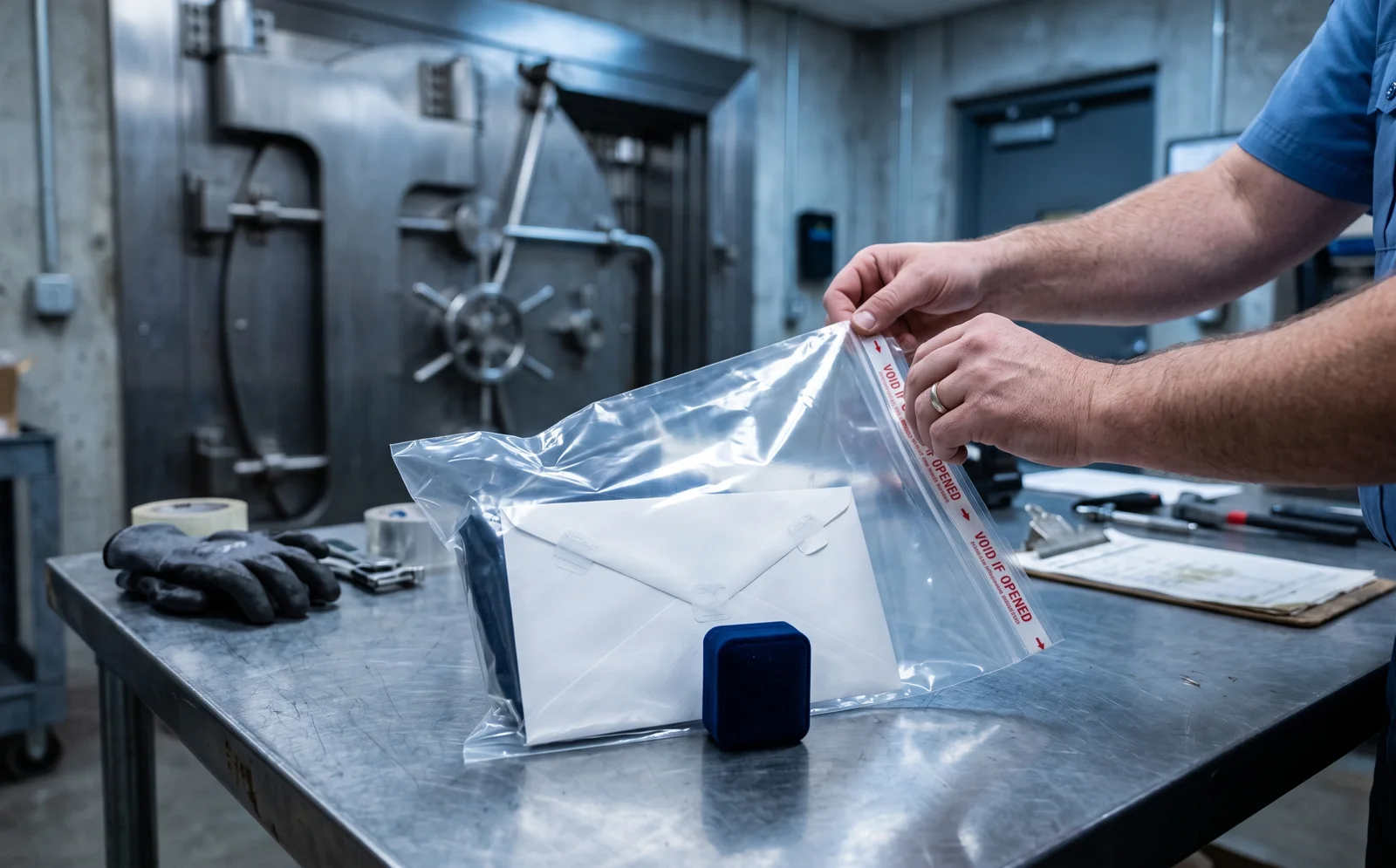
Short answer: most jewelry memo arrangements are consignments under Article 9 of the Uniform Commercial Code, not simple bailments. That means the retailer holding your goods is treated, as against its own creditors, as if it owned them. A signed memo that says the merchandise remains your property is necessary but not sufficient. To be protected you have to perfect your interest, which in practice means filing a UCC-1 financing statement before the goods leave your building. Most suppliers do not, and most find out what that costs only when a customer fails.
This is the least discussed and most expensive gap in the way the trade handles memo. It is worth twenty minutes of your attention.
Memo is older than the UCC, which is part of the problem
Memo is not a modern invention. Richard Weisenfeld, president of the Jewelers Board of Trade, has said the JBT's archives "contain minutes of meetings from the 1890s where memos were being discussed and debated." The practice predates the legal framework that now governs it, and the trade's habits were formed long before Article 9 existed in its current shape.
The practice itself is simple enough. The Jewelers Vigilance Committee's senior counsel Sara Yood describes it as an arrangement letting merchants hold supplier inventory for a specified period, paying only on sale or returning goods at the end of the period. Her summary of the economics is the one worth keeping in mind: "Most of the risk falls on the supplier, who is in effect lending the merchant the agreed upon cost of the goods."
Lending is exactly the right word. When you place goods on memo, you have extended credit. The question the rest of this piece answers is whether that credit is secured.
Why memo is an Article 9 consignment
UCC 9-102(a)(20) defines a consignment as a transaction, regardless of its form, in which a person delivers goods to a merchant for the purpose of sale — subject to a set of conditions. The merchant must deal in goods of that kind under a name other than the consignor's; must not be an auctioneer; must not be generally known by its creditors to be substantially engaged in selling the goods of others; the goods must be worth $1,000 or more per delivery; and they must not be consumer goods.
Read that third condition again, because it is the one that catches jewelry. A retail jeweler's bank does not know, and has no way of knowing, that a meaningful share of the case stock belongs to suppliers. Neither do the retailer's other creditors. The store looks like a store that owns its inventory. That appearance is precisely what Article 9 is designed to address, and it is what pulls memo into the statute.
The consequence, in JVC's own words: "while the goods are in the possession of the merchant/consignee, the merchant/consignee is deemed to have the same rights and title to the goods" as the supplier. Under UCC 9-319, where the consignor's interest is unperfected, the consignee gains apparent ownership rights that bind third parties. Where the interest is perfected, creditors are limited to the very limited interest in the consigned goods that the consignee actually has.
Attorney Leonard M. Weiner, who has written about this for the jewelry trade specifically, puts it plainly: Article 9 expressly made clear that consigned goods remain subject to the customer's creditors' claims, notwithstanding traditional memo language. He estimates the trade carries hundreds of thousands, if not millions of dollars in memo inventory at any given time.
What perfection actually requires
A purchase-money security interest arises automatically under UCC 9-103(d) when you consign goods. Automatic is not the same as protected. Perfection requires four things, and getting any of them wrong can invalidate the filing:
File before delivery. Not after the goods have gone out, and not when a customer starts looking shaky. Before.
File in the right state. Where the merchant is incorporated or registered, which is not necessarily where the store is.
Use the merchant's exact legal name. Not the trading name over the door. JVC's guidance is specific about this, and it is a common failure point — a filing against "Smith Jewellers" when the registered entity is "J. Smith Holdings LLC" may not do anything at all.
Describe the collateral specifically. Generic language weakens the filing.
There is a fifth requirement that trips up suppliers who do file. Where another secured party has already filed against the merchant's inventory — a bank with a blanket lien, typically — you must also give that party advance notice of your intended purchase-money security interest. A filing alone does not jump the queue. The American Bankruptcy Institute's analysis of the consignment rules is explicit that the consignor must provide specific notification to the competing inventory secured party beforehand.
And filings expire. Sara Yood's advice, given to designers caught in a recent large retail bankruptcy: "File a Uniform Commercial Code (UCC) and keep them updated, as they only last for a few years."
What happens when the retailer fails
Consigned goods become property of the consignee's bankruptcy estate. That is the starting position, and everything else is an argument about your place in line.
An unperfected consignor is exposed to turnover actions under sections 542 and 543 of the Bankruptcy Code, and to preference actions under section 547(b) for transfers within the 90 days before filing. JVC's plain-language version: without perfection, the goods, or any proceeds from the goods, may be used to satisfy the holder's debts, and banks will be first in line to collect.
The preference rule deserves its own warning. JVC flags the 90-day preferential transfer rule as permitting courts to reverse payments or transfers of goods made within 90 days before filing. Which means that the instinct every supplier has — get the parcel back the moment you hear the retailer is in trouble — can be undone. Retrieving your own goods from a failing customer is not necessarily the end of the matter.
Perfection changes the position materially. It elevates the consignor from a general unsecured creditor to a secured creditor. It does not make recovery automatic. Asked whether designers would get their merchandise back from Saks Global — a bankruptcy with liabilities between $1 billion and $10 billion and more than 10,000 creditors, including Chanel at $136 million and Kering at $59.9 million among the top unsecured — Yood's answer was "Possibly. It depends on the wording and nature of the agreements with debtors," and getting goods back "may require an agreement between the various parties and lenders or a court order."
The Samuels Jewelers bankruptcy is the other instructive case, with liabilities over $100 million and top unsecured creditors including Exclusive Design Direct at $9.1 million, Taipinyang Trading at $6.1 million and GoGreen Diamonds at $5.5 million. What happened next is the part suppliers should note: once the trouble was public, vendors began to pull out, refusing to supply the retailer with merchandise on consignment. By then the exposure already existed.
Why suppliers don't file, and whether that reasoning holds
The honest answer is that retailers push back. Dionne Kenyon of the JBT explained the mechanism to JCK: "If you are borrowing money you have standard language against permitted liens and encumbrances. So if somebody files a UCC, the retailer could find themselves in violation of a loan covenant." That is a real commercial problem for the retailer, not an imagined slight.
The counter-argument came from Cecilia Gardner, then general counsel at JVC: "A lot of retailers think that when manufacturers file UCC1s, that it's some sign of a lack of trust or a sign of concern regarding their creditworthiness. They shouldn't be concerned. It's a sign that their business partners are acting in a responsible way."
Both things can be true. The practical position for a supplier is to decide filing policy by exposure rather than by relationship: file above a dollar threshold you set, and be consistent about it, so that no individual customer reads the filing as a judgement on them. Consistency is what turns an accusation into a policy.
The other risk: entrustment
Bankruptcy is not the only way to lose memo goods. UCC 2-403 — the entrustment rule — provides that entrusting goods to a merchant who deals in goods of that kind gives that merchant power to transfer the owner's rights to a buyer in ordinary course of business. A memo that forbids sale does not, by itself, defeat this.
Courts have limited it. In Zaretsky v. William Goldberg Diamond Corp, a 7.44-carat diamond was consigned to a stylist under an agreement stating he acquired no right or authority to sell, pledge, hypothecate or otherwise dispose of the merchandise. He stole it, and it passed through intermediaries to good-faith purchasers. The Second Circuit held that section 2-403(2) transfers title only where the merchant deals in goods of that kind; the stylist did not regularly sell diamonds, so he could not transfer the owner's rights. The consignor kept ownership and the innocent purchasers bore the loss.
In Blue River Gems Inc. v. S.V. & V. Diamond Corp, a $400,000 necklace went out on a memo stating it remained the property of the consignor with no authority to sell or dispose. The consignee transferred it two weeks later to another dealer in partial satisfaction of a debt exceeding $1 million. The court granted summary judgment for the consignor, holding that the transferee was not protected by the entrustment statute, because the definition of a buyer in ordinary course does not include a person who acquires goods in total or partial satisfaction of a money debt. The court also applied a heightened good-faith standard to a merchant buyer, noting red flags: the consignee's known financial difficulties, prior instances of selling consigned goods without payment, and failure to obtain invoices or ownership documentation, which it described as customary jewelry industry practice.
Both cases turned on memo language that expressly retained title and forbade disposition. Which is a concrete demonstration that the drafting does real work — and a reason to make sure yours says those things.
What this means for how you run memo
None of this is an argument against memo. Yood's own framing is the right one: "The jewelry business is inherently risky, but we know [it] relies on memo business, so you have to do things to mitigate that risk." The mitigations are unglamorous and mostly administrative.
Get a signed consignment agreement, not a bare memo slip. Make it crystal clear that you retain title and ownership. Specify payment within 15 to 30 days of sale rather than lengthy terms. Require segregated, tagged inventory so the goods are identifiable as yours. Arrange insurance naming you as loss payee before delivery — a policy covering your own inventory does not automatically cover goods sitting in someone else's case. Reconcile monthly. Require notification if the merchant changes its address or legal name, because either can break a UCC-1 filing. And have an attorney familiar with these issues review your form; Weiner's warning is that there are major variations in the texts of these agreements.
Then keep records good enough to act on. Which brings this back to something mundane: you cannot enforce terms you cannot evidence, and you cannot evidence what lives in a notebook. Knowing precisely what went out, to whom, on what date, under what terms, and what has come back is the foundation everything above sits on.
Where Jewelia fits
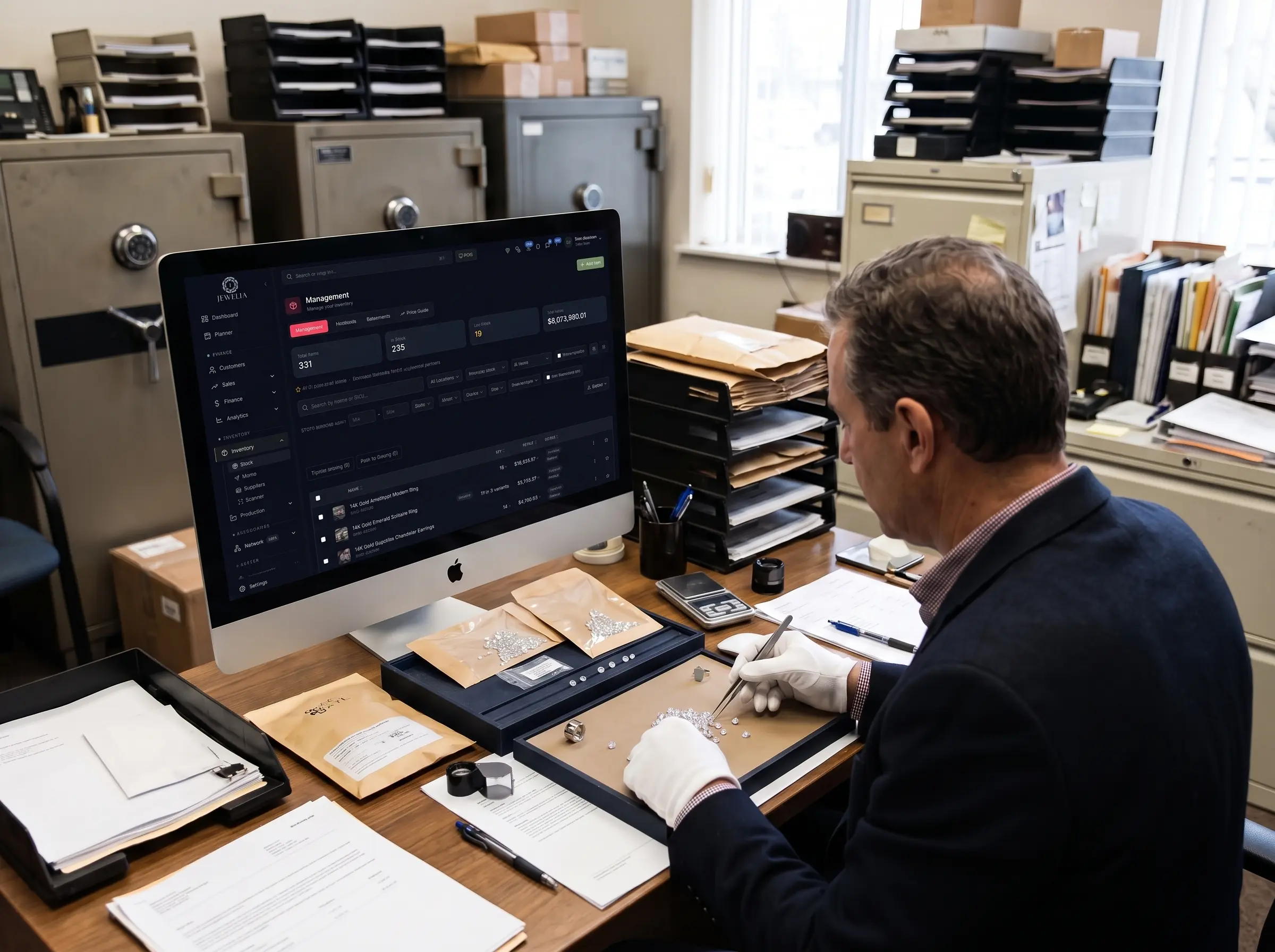
Memo & Ledger exists to make that record automatic rather than diligent. Goods go out with terms, a due date and a PDF both sides receive. Every line is tracked independently — still out, returned, or sold at the price it actually went for — with 30/60/90 aging and an overdue count per counterparty, so exposure to a single customer is a number you can look at rather than a feeling. Delivery is confirmed by a link the other side opens without an account, ticking off what actually arrived and attaching photos, which is the documentation the Blue River court was pointing at when it described obtaining invoices and ownership documentation as customary practice. And both parties can open the same netted ledger, so a reconciliation is a shared screen rather than two spreadsheets that disagree.
None of that is legal advice, and none of it replaces a filing. It is the operational layer underneath one. Memo out and the Ledger are on the $179 Starter plan; memo in is on Professional.
Bottom line
A memo that says the goods are yours protects you against the retailer. A UCC-1 filed before delivery, in the right state, against the right legal name, with notice to prior secured parties, is what protects you against everyone else. The first is what the trade does by habit. The second is what the law actually rewards, and the gap between them is where suppliers lose parcels.
This article describes general US commercial law and is not legal advice. Memo and consignment arrangements vary, state law varies, and the consequences of getting a filing wrong are significant. Talk to a lawyer who knows the jewelry trade before you set your policy.
Frequently asked questions
- Does a signed memo agreement protect my goods if the retailer goes bankrupt?
- Not on its own. Most jewelry memo arrangements meet the UCC Article 9 definition of a consignment, which means the consignee is treated as having the same rights in the goods as you do. If your interest is unperfected, the goods become property of the bankruptcy estate and you stand in line as a general unsecured creditor. Perfecting — filing a UCC-1 financing statement before delivery — is what moves you to secured status.
- Why does memo count as a UCC Article 9 consignment rather than a simple bailment?
- UCC 9-102(a)(20) defines a consignment as a transaction, regardless of its form, in which goods are delivered to a merchant for sale, where the merchant deals in goods of that kind under its own name, is not an auctioneer, and is not generally known by its creditors to be substantially engaged in selling the goods of others, the goods are worth $1,000 or more per delivery, and they are not consumer goods. A retail jeweler's customers and creditors generally assume the case stock is the store's own, which is exactly the condition that pulls memo into Article 9.
- What do I have to do to perfect my interest in memo goods?
- File a UCC-1 financing statement before the goods are delivered, in the state where the merchant is incorporated or registered, using the merchant's exact legal name, with a specific description of the collateral. Where another secured party has already filed against the merchant's inventory, you also need to give that party advance notice of your purchase-money security interest. Filings expire after a few years, so they have to be renewed.
- Why don't more suppliers file UCC-1s?
- Mostly because retailers object. Many retail loan agreements contain covenants against permitted liens and encumbrances, so a supplier's filing can put the retailer in technical breach — the Jewelers Board of Trade has made this point directly. Retailers also tend to read a filing as a statement about their creditworthiness, which the Jewelers Vigilance Committee has argued is the wrong way to see it: filing is a sign that a business partner is behaving responsibly.
- If I get my goods back just before a retailer files for bankruptcy, am I safe?
- Not necessarily. The preference rules allow a court to reverse transfers made within 90 days before a bankruptcy filing, and that can include the return of goods. The Jewelers Vigilance Committee flags this explicitly in its guidance on memo transactions. Recovering merchandise from a bankrupt retailer often requires agreement between the parties and the lenders, or a court order.
- Can a retailer who holds my memo goods pass good title to someone else?
- Sometimes, which is the other half of the risk. Under the entrustment rule in UCC 2-403, a merchant who deals in goods of that kind can transfer the owner's rights to a buyer in ordinary course. Courts have limited this — in Zaretsky v. William Goldberg Diamond Corp the Second Circuit held that a stylist who did not regularly sell diamonds could not pass title, and in Blue River Gems the court held that someone taking goods in satisfaction of a debt is not a buyer in ordinary course — but a genuine retail buyer at a genuine jewelry store is a different case.
Stop reading, start clicking.
Open a live Jewelia company with real inventory, memo, jobs and reports already in it. One work email, no card, no sales call, nothing to install.