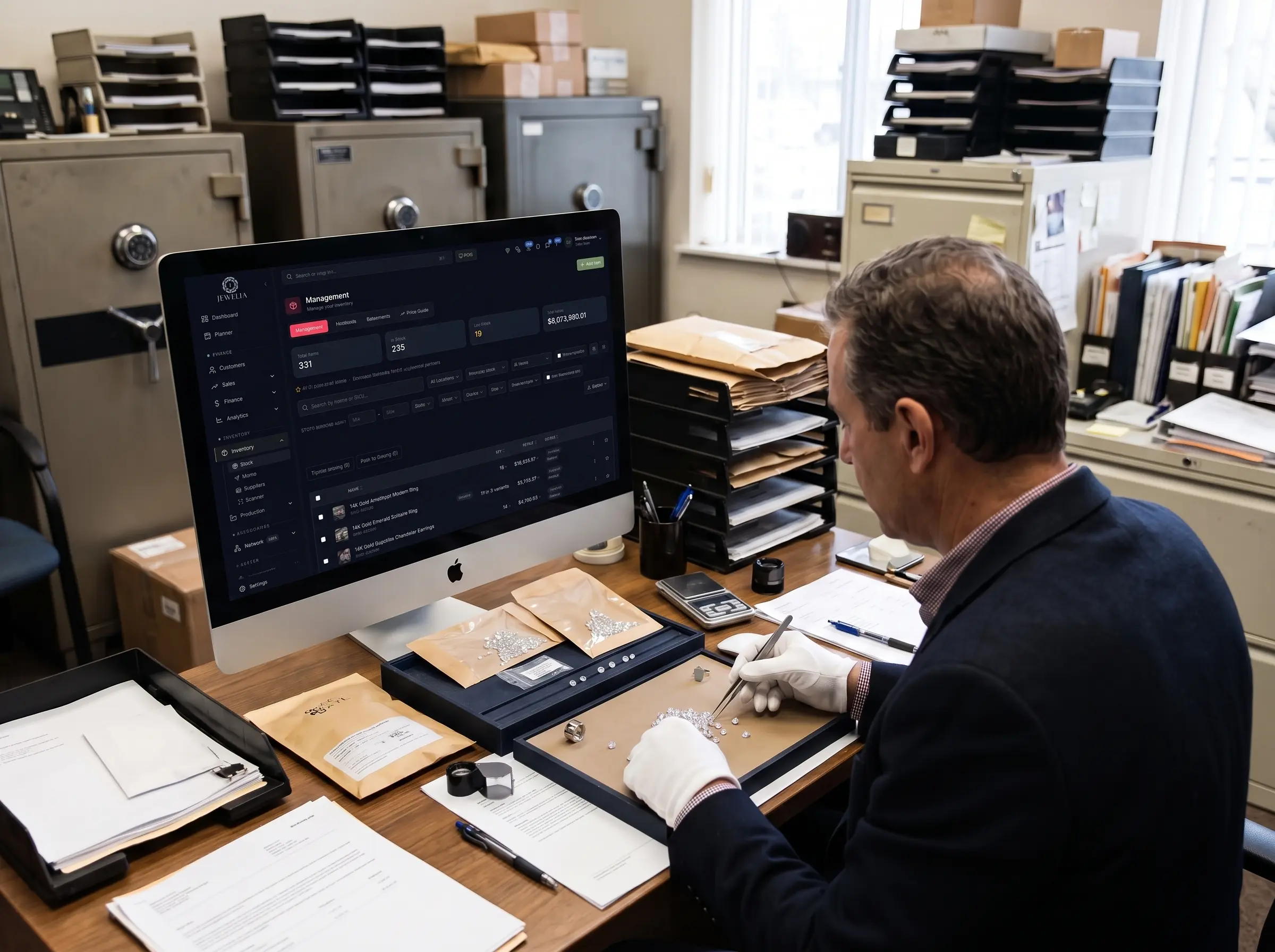
Memo is how the jewelry trade extends trust: goods leave your safe on the promise they'll come back, or be paid for. It's also where the most money quietly leaks — a parcel that was "definitely returned", two rings sold but never invoiced, a balance both sides remember differently.
Here's the system we've seen work, whether you run it in Jewelia or on paper.
Record five things on every memo line
- Who has it — the account, and the person who signed.
- What — item ID, description, weight/count for loose goods, and the agreed price (memo price, not retail).
- Terms — due date, and whether it's approval, consignment or a fixed-term memo.
- Status per line — out, returned, sold, extended. A memo with ten lines can have five statuses.
- The paper — a PDF both sides received when it went out.
If any of these live in WhatsApp rather than a record, they don't exist when you need them.
Age it weekly
Sort open memo by days out. Anything past terms gets a nudge; anything past 60 days gets a call. Most losses happen not because someone is dishonest but because a memo aged silently for nine months and everyone's memory drifted. Software should do this for you: due-date reminders, 30/60/90 buckets and an overdue count you can't ignore.
Reconcile per line, not per memo
The common failure: a retailer keeps two of ten pieces, returns eight, and pays for "the memo" at a number that doesn't match anything. Reconcile line by line — eight returned (checked against the tag), two sold at the memo price on the sheet, invoice generated from those two lines. The memo closes only when every line has a terminal status.
Memo in is the same discipline in reverse
Goods you hold from a supplier on memo are a liability. Track them with the same rigour: what's due back, what you sold, what you owe. Otherwise you'll get a statement you can't argue with.
The shared ledger is what ends disputes
Every dispute we've heard has the same shape: two ledgers, two memories. The fix is one ledger both sides can see — every memo line, every payment with its method and reference, a running net balance, per account. When the retailer can open the same statement you're looking at, "I paid for those" becomes a five-second check instead of a ten-minute argument.
That's what Jewelia's Memo & Ledger module does: memo out and in with per-line status, aging and reminders, PDF memos, one-click convert to invoice, and a netted Ledger per account with a live statement link. Memo out and the Ledger are on the $179 Starter plan; memo in is on Professional.
If you're on paper or spreadsheets today, the biggest step isn't the software — it's deciding that memo lives in one place. Do that first.
Frequently asked questions
- What should I record on every memo line?
- Five things: who has it including the person who signed, what it is with item ID, description, weight or count for loose goods and the agreed memo price, the terms including due date and whether it is approval, consignment or fixed-term, a status per line, and the PDF document both sides received when it went out. Anything living only in a chat thread does not exist when you need it.
- How often should I age open memo?
- Weekly. Sort by days out, nudge anything past terms, and call anything past 60 days. Most memo losses happen not because somebody was dishonest but because a memo aged silently for months and both sides' memories drifted apart.
- How do I reconcile a partial return?
- Line by line, never at the document level. If a retailer keeps two of ten pieces and returns eight, check the eight against the tags, invoice the two at the memo price on the sheet, and close the memo only when every line has a terminal status. Paying for the memo at a single blended number is how disputes start.
- Is memo in as important to track as memo out?
- Yes. Goods you hold from a supplier are a liability sitting in your case, not stock you own. Track what is due back, what you sold and what you owe with the same rigour, or you will eventually receive a statement you have no basis to argue with.
- Why does a shared ledger end most memo disputes?
- Because every dispute has the same shape — two ledgers and two memories. One ledger both sides can open, with every memo line, every payment with its method and reference and a running net balance per account, turns 'I paid for those' into a five-second check instead of a ten-minute argument.
Stop reading, start clicking.
Open a live Jewelia company with real inventory, memo, jobs and reports already in it. One work email, no card, no sales call, nothing to install.