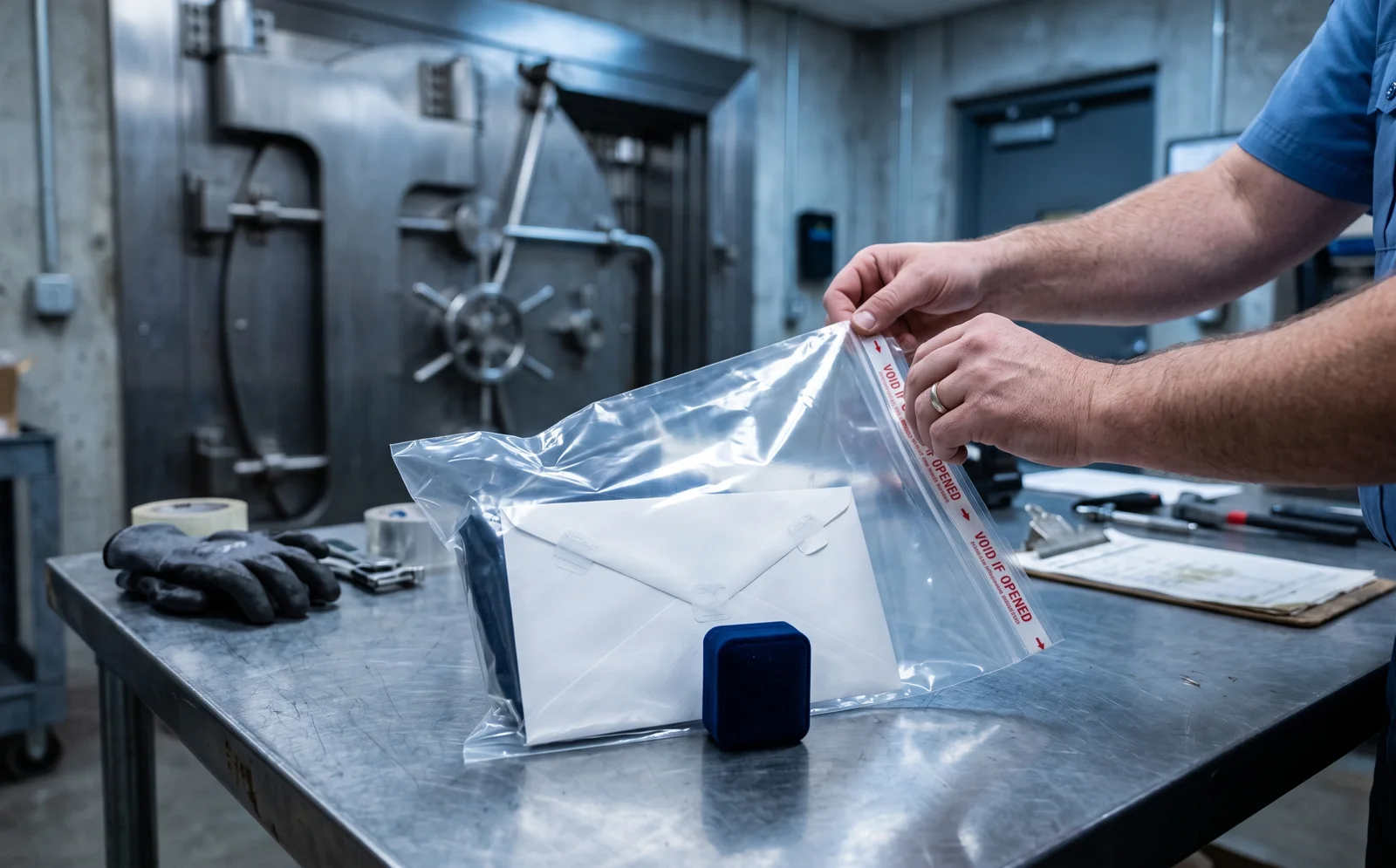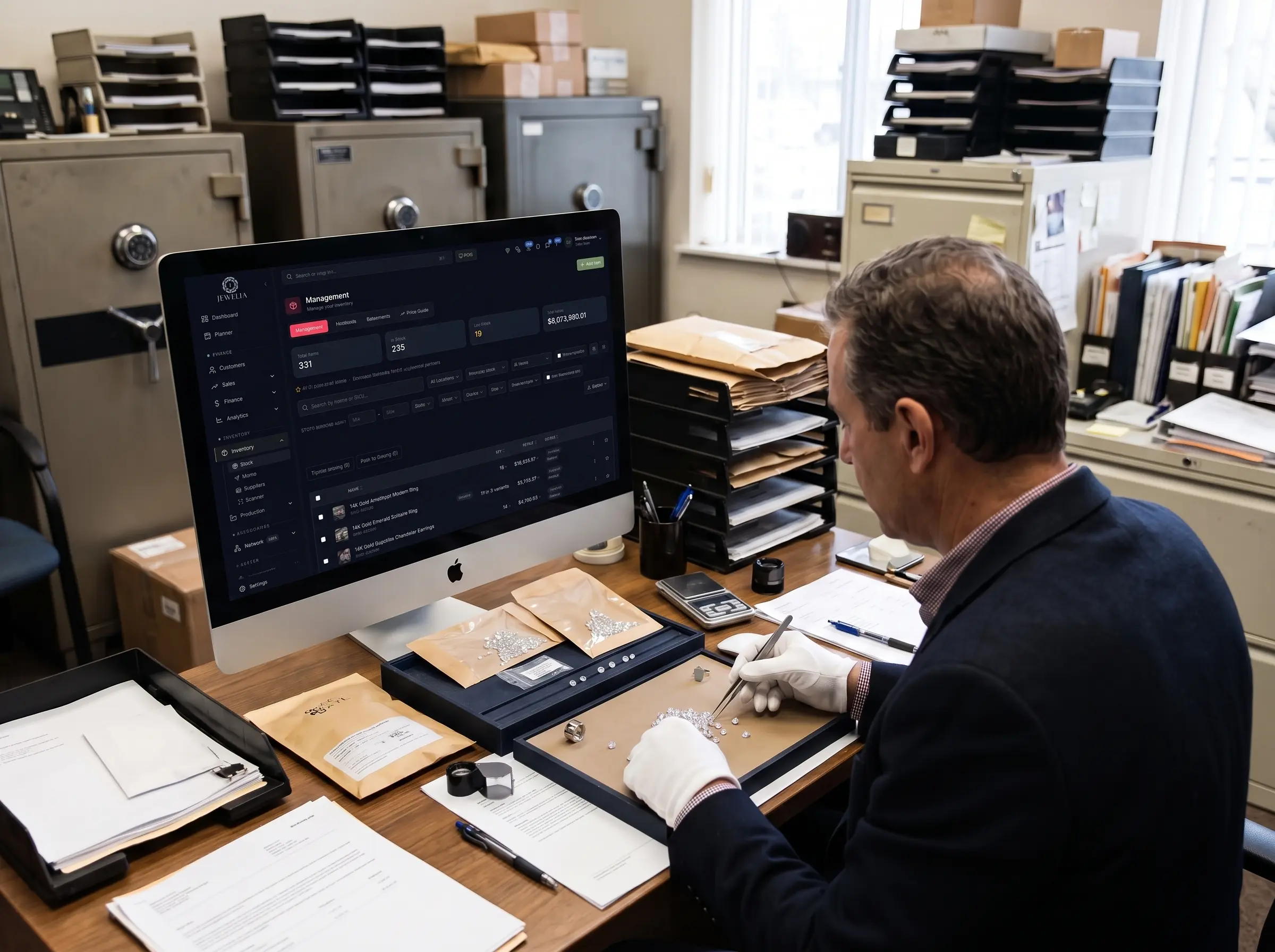
Short answer: good jewelry consignment management means always knowing, for every memo and consigned piece, where it is, whose it is, what it's worth, and how long it's been out — so you can reconcile with confidence, return or settle on time, and never lose track of a valuable that isn't technically yours. A purpose-built jewelry platform does this far more reliably than a spreadsheet, because consignment involves valuables, multiple parties, and aging that a static sheet can't keep honest.
Memo and consignment are among the most valuable — and most nerve-wracking — parts of the jewelry business. You're holding or placing high-value pieces that belong to someone else, across locations and partners, often for weeks or months. Managed well, it expands your inventory and relationships without tying up capital. Managed on a drifting spreadsheet, it becomes a slow-motion source of stress: which piece is where, whose is it, has it aged past its terms, and can everyone agree on the count?
Why consignment is harder than regular inventory
Consignment breaks the assumptions ordinary inventory tracking relies on. With owned stock, you know it's yours and it's here. With memo and consignment, neither is true:
- Ownership is split. A piece in your case may belong to a supplier; a piece you've placed with a partner is still yours. The location and the owner don't match, and both must be tracked.
- It moves between parties. Pieces flow out on memo, get placed on consignment, come back, or sell — and each movement changes who owes whom.
- It ages. Every memo and consignment has terms — a return window or settlement date — and value that sits out too long is exposure, not opportunity.
- It has to reconcile. Two parties must be able to agree on exactly what's out, whose it is, and what's owed. Disagreement here strains relationships and risks real money.
A spreadsheet can list these facts, but it can't keep them current on its own, and consignment punishes stale data harder than almost anything else in the business.
Where the spreadsheet breaks down
Spreadsheets are where most shops start, and there's no shame in it. But consignment is exactly the workload that exposes their limits:
- They don't age anything. A sheet won't tell you a piece has been out 90 days unless someone calculates it by hand, every time.
- They drift. Multiple people edit multiple versions; the "master" is whichever one you're looking at.
- They don't tie to the piece or the party. The value, the photos, the partner, and the terms live in separate columns or separate files.
- They make reconciliation manual. Agreeing on the count means comparing your sheet to their sheet, line by line.
None of this means anyone did anything wrong. It means the tool was never built for split ownership, movement, and aging.
What good consignment management actually tracks
Whatever system you use, consignment management should keep these facts current and connected for every memo and consigned item:
| What to track | Why it matters |
|---|---|
| The piece and its value | You're responsible for someone's valuable, or owed for yours |
| Owner vs. current holder | Location and ownership don't match — both must be clear |
| Direction | Whether it's in on memo or placed out on consignment |
| Terms and aging | Return windows and settlement dates; how long it's been out |
| Status and movement | Out, returned, sold, or settled |
| The partner relationship | Who it's with, and the full history with that party |
When all of this lives in one connected place, the two questions that cause the most stress — "where is everything?" and "do we agree on the count?" — become easy to answer.
Reconciliation without the friction
The moment of truth in consignment is reconciliation: sitting down with a supplier or partner and agreeing on exactly what's out and what's owed. On spreadsheets, this is where relationships get tested, because two drifting sheets rarely match.
Clean consignment management makes reconciliation a non-event. When every piece's owner, location, value, terms, and status are current in one system, you can produce an accurate, shared picture on demand — return what's due, settle what's sold, and keep the partnership built on trust instead of tense line-by-line comparisons. Aging visibility means you act on terms before they lapse, not after.
Where Jewelia fits
Spreadsheet chaos in memo and consignment comes from one root cause: split ownership, constant movement and aging that a static sheet cannot keep honest.
Memo & Ledger is built for exactly that. Goods go out with terms, a due date and a PDF both sides receive. Every line is tracked independently — still out, returned, or sold at the price it actually went for — with 30/60/90 aging and an overdue count per counterparty. A sold line converts to an invoice in one click. Delivery is confirmed by a link the other side opens without an account, ticking off what actually arrived and attaching photos, so a discrepancy is logged against the memo rather than argued about later. And both sides can open the same netted ledger, which is what turns reconciliation from a stress test into a formality. Memo out and the Ledger are on the $179 Starter plan; memo in is on Professional.
Bottom line
Memo and consignment management goes wrong when split ownership, movement, and aging outgrow the spreadsheet holding them. Track every piece's value, owner, holder, direction, terms, and status in one connected place, and reconciliation stops being a stress test and becomes a formality. That's how you grow consignment relationships without the chaos — and without the risk.
Retire the consignment spreadsheet for good. Book a Jewelia demo →
Frequently asked questions
- What is jewelry consignment management?
- It's the practice of tracking every memo and consigned piece — its value, who owns it versus who currently holds it, its terms and aging, and its status — so you always know where valuables are and can reconcile confidently with suppliers and partners.
- Why isn't a spreadsheet enough for consignment?
- Spreadsheets can't age pieces automatically, tend to drift across versions, don't connect the value and terms to each piece and party, and make reconciliation a manual line-by-line comparison. Consignment's split ownership and constant movement expose exactly those weaknesses.
- How does better consignment management improve supplier relationships?
- When every piece's owner, location, value, terms, and status are current in one system, reconciliation becomes an accurate shared picture on demand rather than a tense comparison of two drifting sheets — so returns and settlements happen on time and trust stays intact.
Stop reading, start clicking.
Open a live Jewelia company with real inventory, memo, jobs and reports already in it. One work email, no card, no sales call, nothing to install.